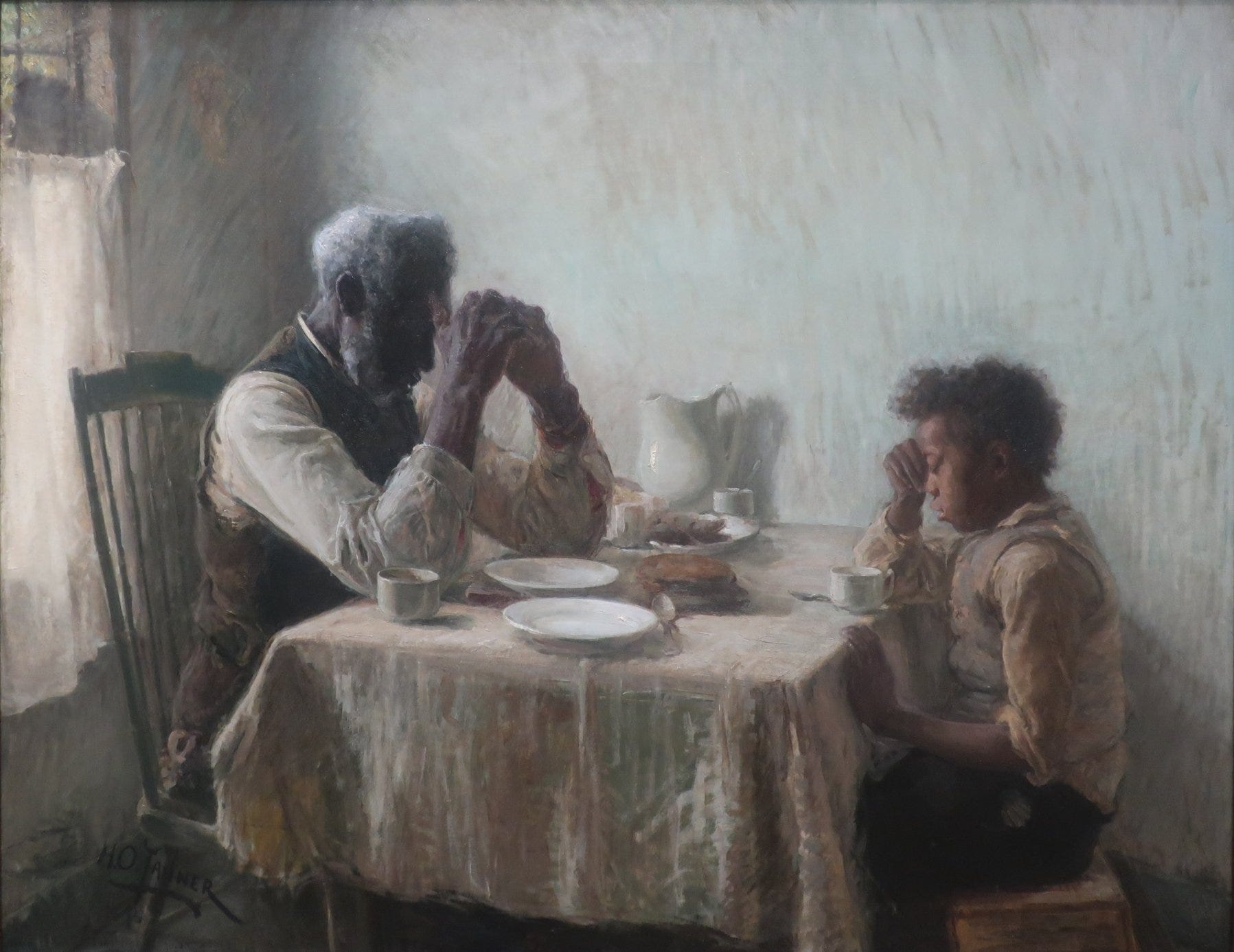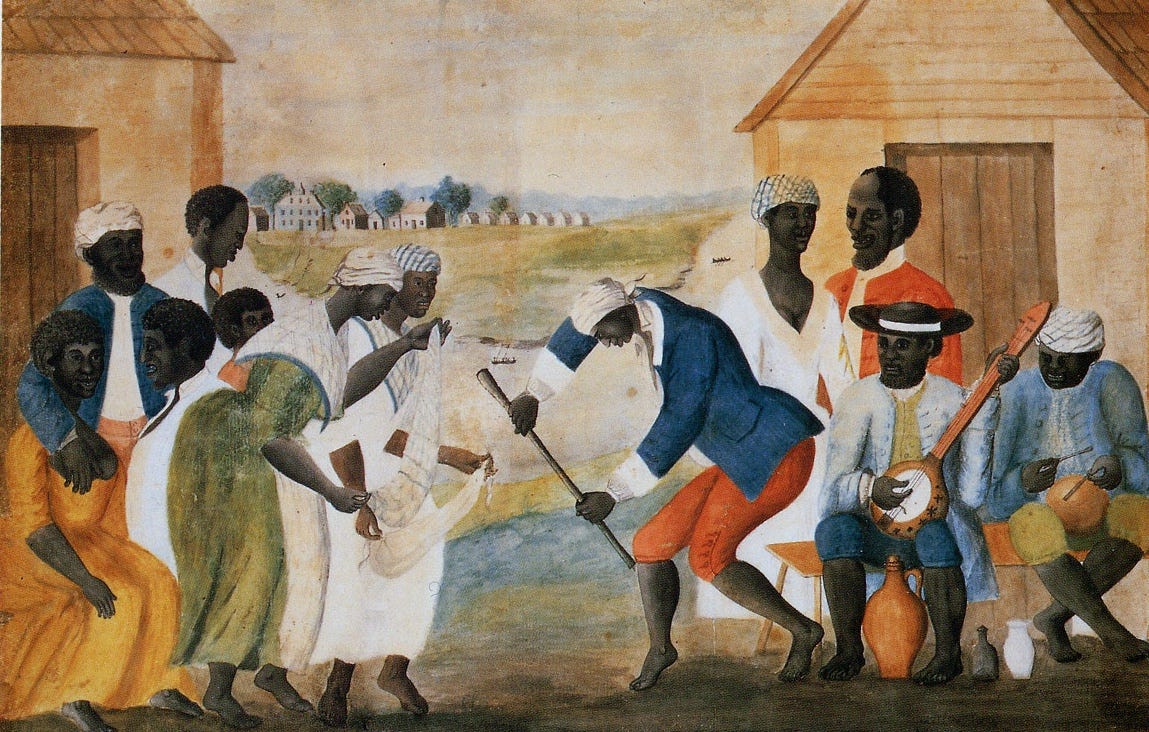
And when I was a slave in Savannah, I toiled my life away looking for you, God.
There in the fields at sunrise in the bright mornings, I sang your songs and tried to remember your words. There in cold sunset in the evenings, I could feel you approaching with the night. I would try to keep my eyes steady over the firelight, trying to see your face in the flames, trying to see as Aaron and Moses had seen.
We were that generation that dreamed of it. Who whispered of great men in the quiet. Who heard words whispered down to us about people far away. People who imagined us free. It was what we saw in the still nights. It was the substance of all our dreams. Falling asleep every night of my enslavement, I would think of you, my Lord, and I would think of freedom. And I would know anew that you and it were one and the same.
And when our elders saw us pray to this new God, they told us those were the visions of the Devil. God was here, in the space between the cotton shrubs, they said. He was here in the love you have for the people you get to keep. He was here in the back of your mind, in its stillness at night. He is not far away. He is not falling from the sky. He is not coming in a wave of fire.
But they belonged to a moment before time. When I was a child, I asked my father what year it was. And he said he did not know what I meant, did not realize that there were men who called each year they lived and each year that had passed by its own number. He counted my years by the summers I had lived and, by the time I had come to my manhood, had long forgotten the tally.
He imagined time in circles, observed only that night follows after day and winter after summer, and imagined all of existence as only the cycling through of the same moment. Day after day. Season after season.
But we were that final generation of enslavement. And we knew time well. We knew the names and numbers of the years we lived through, and those of the years we had passed, and those of the years to come. We knew of change, dreamed of progress, knew that the ideas of one age are but rarely the ideas of the next, and let our prayers be filled with dreams of freedom.
Going to sleep around the campfire, night after night, I would imagine it spreading through the whole field, climbing over the master’s manor, and setting us free. I imagined myself seeing it from the slave quarters, approaching it, and hearing it speak to me, and knowing it was the same fire that called to Moses from a burning bush, promising to bring his people out of the hands of their enslavers, to bring them up out of that land unto a good land and a large—unto a land flowing with milk and honey.
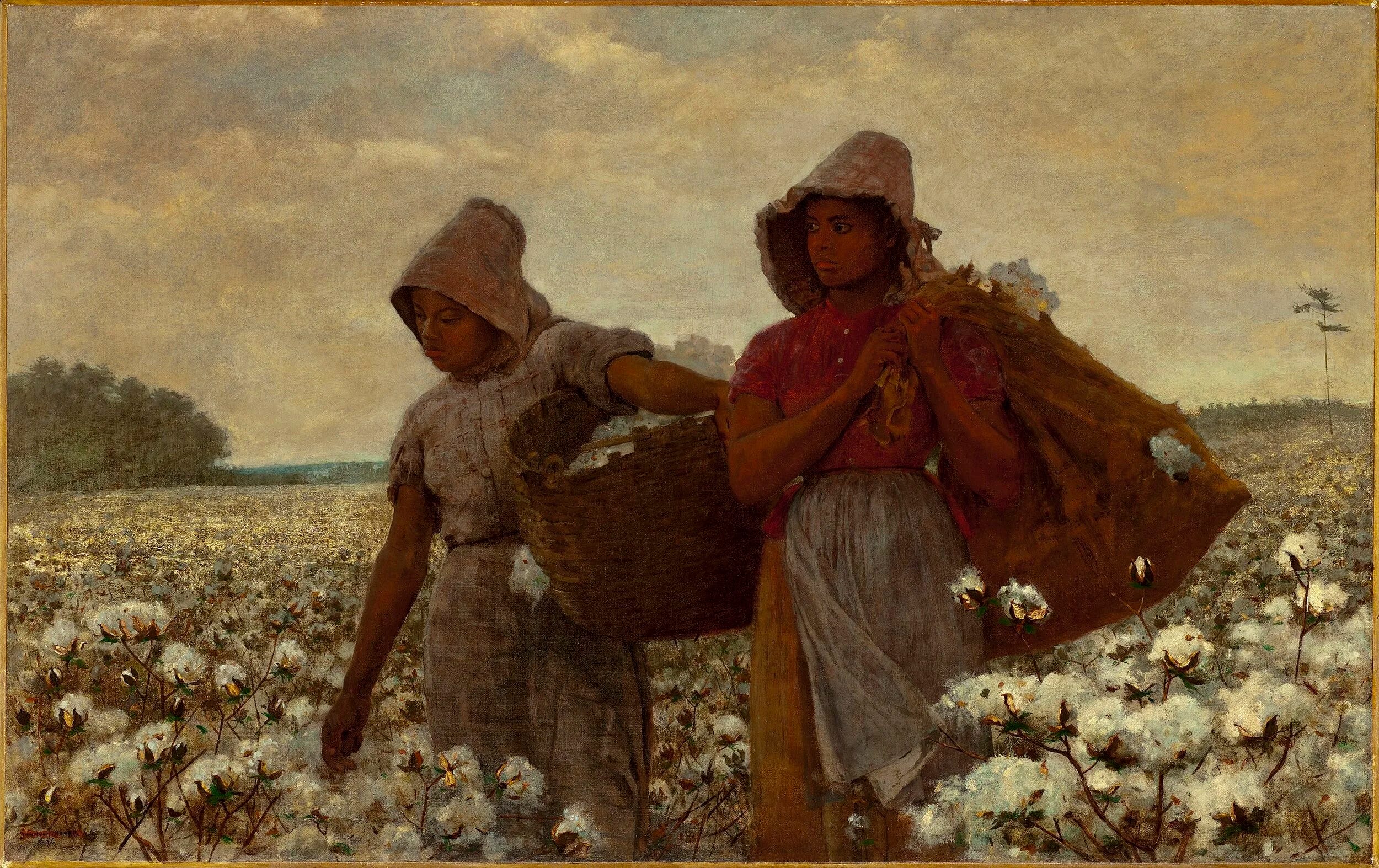
And when I was a child in Bleeding Kansas, I asked my father if God was angry at us. And, called back to life in the dusk, he looked up from his scythe. He rested its blade on the earth and leaned upon its handle. And he said no, that we have done what he has commanded us to do, and that that was enough.
And I asked him as we walked home after sunset, as I carried the scythe and he the grain cradle, how it was that we knew that all we were doing was all God had commanded us to do. There in the night, I could see nothing but the light from the house when I raised my head, and nothing at all when I lowered it. And in the darkness, I heard him ask if I knew what was right and what was wrong. And I told him I think did. “That is enough,” he said.
And when I was Captain, of Company A in Kansas’ 8th Infantry, I knew there was a God when I brought my men down for their final campaign. And I knew there was a God when I saw proud Atlanta entrench into its fortifications and shell us from afar; I knew there was a God when we encircled the city and lay it siege; I knew there was a God when I saw it starve and buckle, its fortifications fall, and its people surrender; and I knew there was a God when the rain began to fall as I held fire in my hand and spread it liberally about me and let it consume a century of another people’s labor in a single evening.
I knew there was a God when I heard them cry to heaven. And I knew God heard them when I burnt down their homes and seized their land. I knew it was God crying for mercy through them. And I knew it was God in me and God in them. One corner of divinity of calling out for mercy to another. Closing my eyes, listening to the sound of the rain and the fire and the wails become one and then many and one again, Solomon’s words in scripture rang through me. To every thing there is a season, and a time to every purpose under the heaven: A time to kill, and a time to heal; a time to break down, and a time to build up. And I knew what time it was then. And I prayed that the times of peace, and the times healing, would come soon, only because I knew it was right to pray for it.
And I knew there was a God when I rounded my men up from their spoils. And I knew all belonged to him, and that all would return to him.
I knew there was a God in the rising morning, as the sunlight and the firelight each veiled themselves with the other. I waited for hours in the downpour with my men, who wished only to be given a moment in General Sherman’s audience.
And when he came, dusty in cannonfire soot, he descended from his horse and shook each of my men’s hands, and mine last. And when I saw them march out from camp the next morning, I knew that they knew that there was a God as well; that, just perhaps, he truly does care for us; that he truly does reward the righteous and cast down the wicked, in this life, as so in the life to come, on earth, as in heaven; that life is full of pain but that there are men who bear their yokes with pride, with diligence, with labor, and strength.
But for all I knew of God, I had never seen his face, nor had I had his voice. I believed they were not for the present living to witness, that they belonged to another time, to a time beyond memory. This I believed when I saw Atlanta fall.
And this I believed when we began our march to Savanah upon the coast. And this I believed when we camped outside Bethleham, a two-day’s march from once-Atlanta. And this I believed when I fell asleep that night, and when I was roused awake by my men, and by the sound of a marching army.
I emerged from my tent and spied the fields around us through my glass. And I saw them. And I saw who they were. I called for my horse and rode it to the meet them, shouting my orders at my men as I approached.
And I stopped before them. I saw their faces coming in and out of the darkness. Faces of men and women and children. I heard their voices. Singing and praying. Hopeful but afraid. Singing the name of the lord. A long procession of freedmen, their wives, and their families, asking to be among us for protection. I spent an eternity there, watching from my horse. Watching them seek refuge amid our banners. And I listened to their prayers and untangled their words. And I knew then for certain that they knew God as I knew God. That was when I saw your face, my Lord God, forming slowly from theirs against the firelight, marching one behind the other. That was when I knew you had saved my soul. That was when I knew that, for every part I was their savior, they were mine a thousandfold.
Because when the war fell upon us, I hadn’t believed it had truly come. To slaughter ourselves in the midst of this new world, with all the work of a new civilization yet to be complete, nearing only a century into this grand, God-given experiment, I thought, was beyond all the folly I believed all the fools in this land were capable of.
And in my continuing disbelief, I saw the finest regimented men of my generation, and all the armies they led, slaughtered for no gain.
And it was long then since I could feel much. I did not care if the union was kept whole. I did not care if all or none who were enslaved were set free. All I felt then was my fury. So, I followed her. And I would have followed her to the end, that strange woman, who flattereth with her words, whose house inclineth unto death, and her paths unto the dead. I would have followed her unto my own sprit’s destruction, and I would awoken to all my sin too late to finally know that Solomon spoke true when he said I would have mourned at the last when my flesh and body are consumed and say, How have I hated instruction! How my heart has despised reproof!
Because I knew that there were other men who were cruel in their rage as I am cruel in mine, that all that kept me from hell, and them hurtling towards it, was the causes we fought for. And I knew I had put so little thought into what I fought for. I had done so much out of anger. And I knew then that, if I had done so much so mindlessly on behalf of the freed, I would have done the same on behalf of a tyrant, against the meek. And that the lord would have let me fall through his sieve before his judgement seat. And that I would be in hell.
And I knew then, watching their mourning, joyous, freed, yet burdened procession, that it was them, they who were freed by our violence, and only them, who may let me be a cruel man in life but be remembered a great man in death.
I saw the procession until its end that night, almost unto the dawn. I lined my men around their makeshift camps and held the first watch alongside them. And when the sun was high, we received our orders to begin our march anew, with a third of the army flanking the new procession upon our rear. And there was talk throughout the army of what to do with them. But we cared for them for as long as they were our charge.
And on Sunday of that week, when were camped outside Zebulon, a deserter from General Davis’s brigade came upon our division and, before he was whisked away to the Major General’s tent, made a small crowd telling everyone, as everyone would later tell everyone else, what Davis had done at Ebeneezer Creek.
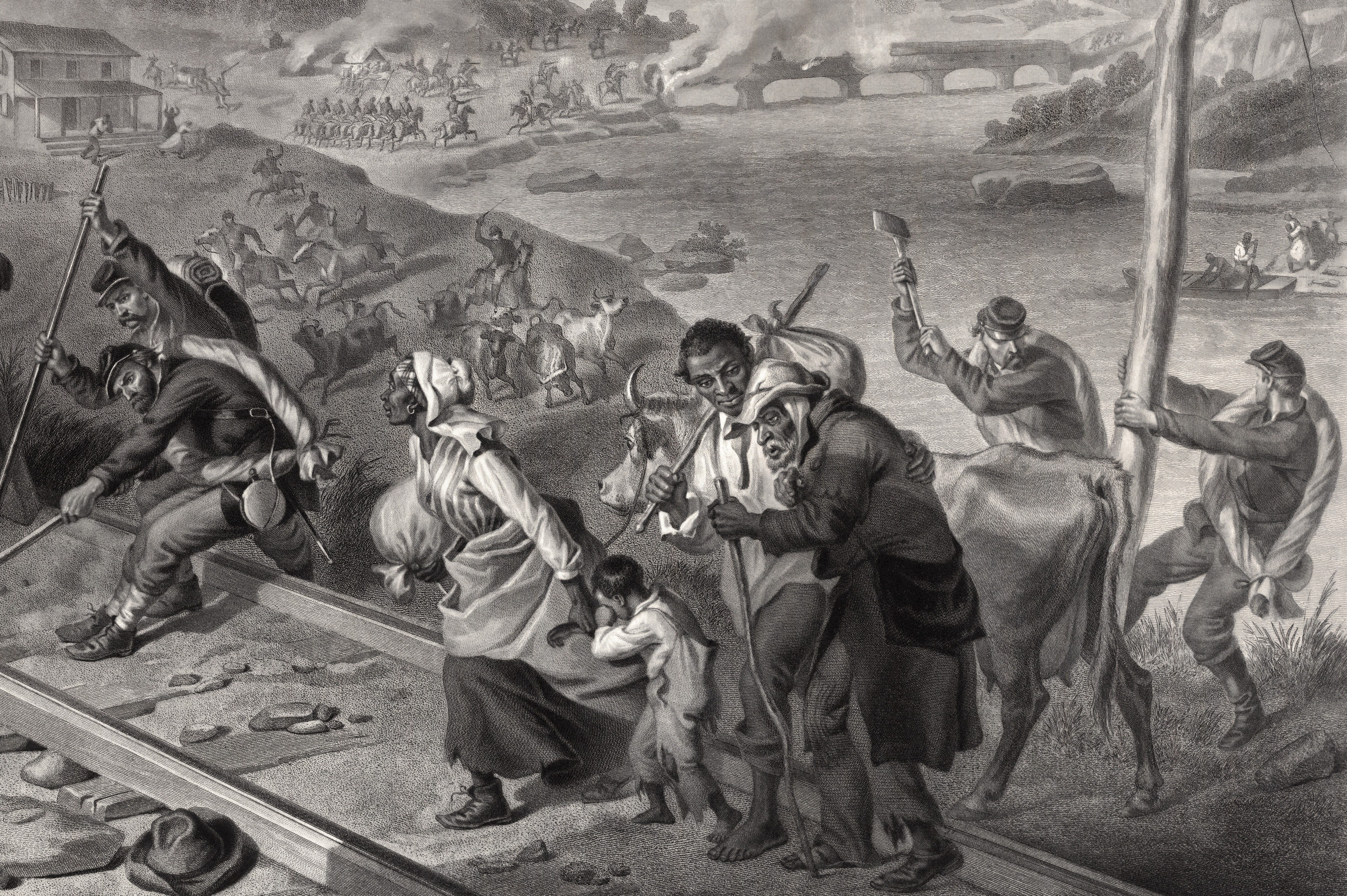
He said that a similar procession of freedmen had come upon their camp outside Ebeneezer Creek; that they asked for refuge; that Davis accepted, had let them believe they were free. But that the night after, he had his engineers build a bridge as they freedmen slept and had crossed his army onto the other side of the creek by morning.
He said that David knew there was rebel calvary approaching; that he had known they would slaughter and re-enslave any freedmen they found; that he let them be slaughtered; that the rebels came upon them and chased them into the creek, and killed everyone who emerged up on the same side alive; that he had cursed Moses, had chosen to close the sea not upon Pharoah and his chariots, but upon the slaves marching to freedom through the desert.
And I knew then that Davis was going to hell. And I knew that if I do nothing different after hearing of evil than I did before, he would drag me down with him, by my negligence wrapped around my neck.
And I pondered alone for a time, well into the morning. I knew for certain then God was good. He had made a place in his heaven for people as lost as I. He did not lead me astray. He loved me. He kept me on his guided path, I who have no eyes to keep it myself. I who am so oft blinded by my rage. He has made a savior of me. He has placed my name in happy remembrance, I who could so easily have been damned to another fate.
And, though it ought not have, news came down to us that General Sherman was to meet with a group of freedmen pastors and ministers to ask them what they wanted done for their people, and to finally decide what our duty to them must be. And so, as we neared Savannah, I wrote to my colonel and asked if I could be there with the general when he met with them.
And I received a letter back in the evening saying I was to join his retinue. And so, I set out. And when I reached that old house-made-headquarters, I saw that, of the soldiers who joined the general, there were only a few other pale faces. And when the general arrived, we all rose to salute him. He motioned to us to sit, and we sat, waiting for Pastor Frazier to arrive, and to deliver the evening’s first remarks.
With the windows open, the breeze streamed through the room and stopped in a slow rhythm. I had never been to the sea. But you could taste its salt against the wind down every street in the city.
The pastor was late. But none in that room said much to even remark it. Pastor Frazier who had grown vegetables in a thicket outside his slave quarters for 20 years to purchase his freedom, selling them to a white foreman who took his own cut before selling them again; Pastor Frazier who worked another 10 years to earn his wife’s freedom before presenting the total sum to his owner one evening in 1856. I don’t think any of us would have had much to say to him about waiting and patience.
But when the pastor came, we rose. At the head of his party, he seemed a small, frail man. But he moved with steadiness, as if he considered every action before he made it. As if he had questioned the purpose of all things under the sun for so long and through so much despair that he was left with nothing but purpose, had infused it into all his being, did nothing without its presence, but when doing anything, did it with the conviction he must have found hidden somewhere between the roots of the vegetables he grew there in the thicket at night, away from his master’s eyes.
I remembering only wondering then what it was they would ask for. Watching them tug up at their collars and down at their cuffs, wishing they themselves did not have to see the scars that stretched out like branches, down past their wrists and up past their necks, I knew that perhaps they had the right to ask for it all; to ask for all the wealth owed to two hundred and fifty years of unrequited toil, to ask for every drop of blood drawn with the lash to be paid by another drawn with the sword, that such would be their right if they knew, and knew that we knew, that the judgments of the Lord were true and righteous altogether.
After the general had shaken their hands, he motioned them to sit and sat down himself. Only we, the soldiers in his retinue, and Pastor Frazier remained standing.
And soon he began speaking, as the breeze passed anew through the room. He spoke gently, but in that voice pastors know well, that voice that is loud even when it is quiet, one that fills a room, though it sounds as if it was speaking only in an aside to a spouse.
And he asked only for their own labor. For their right to till the ground, and for their right to collect what they plant after they have tilled it.
I listened to very little else that whole evening. At night, I rode back to camp alone, through the darkness that draped over the land like a miles-long curtain, brushing over my head as I pressed back into country.
I vanished from myself for a long moment. It was only when I saw a light climbing up a broad hill that I became real to myself again. It was a small campfire, alone on the peak of that knoll, at a distance from the rest of camp down in the valley, which only appeared to me clearly now as I approached.
The men around the campfire were few. Their uniforms shined that brilliant blue from miles away, but it was only when I was close enough to feel the heat of their fire that I saw that they were black. And I understood why they were resting far from the main camp. I understood that it might not have been their choice. I tipped my hat towards them as I passed. They tipped theirs in return.
They must be the only ones in that city of tents, I thought as I approached the main camp, who had never doubted the cause for which they were fighting. The union, its unity, its promises, were not fictions to them. And so, now they could not be fictions to us either. Why do we then keep them far from us? They have who made this country real. They who, for all our good, held us to our own promises. Especially after we have come here all the way to give them freedom, though not all of us had known so when we decided to come.
Under the full moon, the land seemed to glow. I looked upon this new Canaan, which they and we had killed for. This new land of milk and honey. This once-pure land, bespoiled by sin. And I knew it could only be remade pure by them, by their labor, by them growing the fruits of their freedom for themselves, by them enjoying all of it except that which they wish to give away in kindness.
And so, when the order came four days later, I wrote to my colonel again. And soon, I received the orders I wished for. I asked half my men to make halters out of all our spare rope and went out with the other half to lead one mule and then another to the center of where one freedman man pulled an odometer until it read 1,320 feet and another pulled a second perpendicular until it read the same.
“I will return,” I thought, handing one mule’s halter and then a second to a wife or a child, “to this the land of their once-enslavement. For now, let them spend their own labor wisely. Let them work over this land. Let them make it young anew. Let them collect all its fruits. Let all be repaid. And when it is, I will return, and I will ask for only a portion of its fruit. And they will give it to me in kindness. And it will be cease to be mine, and it will cease to be theirs.”
And when I was a freedwoman in Macon, helping my husband till the soil not far from where we had once been enslaved, I watched myself question life’s worth again. And I began to realize I was sinking back into despair.
Soon after, I began to taste metal in all my meals, saw spotting upon my loincloth, and knew what was coming. And when I saw my belly swell, I knew for certain I was creating life, just as you had created life. I felt it take all my strength from me. I felt my needs increase to create it. And when I gave birth, I knew it was more painful than all the lashes I had borne.
And looking upon my daughter, this being created entirely within me, whose flesh my flesh labored to create, I thought of you, and thanked you. For I had felt your burden, my Lord. If this little life had taken so much from me, I could not imagine how much it had taken from you to create life itself.
That was the first year we were free. And the day after, a white man from the freedmen’s bureau came to our door, gave us his blessings, told us of the school they were building on the main road, and told us to please send her there when she is able.
My daughter spends all the sun’s time in school, as my husband and I work over the field. Soon after her first day, a kind quaker family from the north sent us a bible. And once my daughter knew the symbols well, she taught them to me as well. Every night I trace my finger over your scripture, my Lord. Under candlelight in the summer, in the fireplace light in the winter. And I bring the words out of the page. And I make your words mine. As they were once spoken by you, now they are spoken by me.
My daughter is as tall as my shoulder now. And she is beginning to have her own sadnesses. And I feel helpless to stop them. I reach into myself, trying to find what happiness of mine I have to give her, and return, always, empty-handed.
The day I knew I was free was the happiest day of my life. I believed that once I was free, nothing else would matter to me. That I could simply spend the rest of my life knowing I was free. And that that would be enough.
And I only knew for certain I was wrong only when I had her, when I spent her first early, joyful years, in a deep personal sorrow, thinking only of how little I had to give her.
I knew I was free. But not free from toil. I knew I was free. But not free from want. I knew I was free. But not free from ignorance. And I asked over and over again when my deliverance—my true deliverance—would come.
And I thought myself ungrateful. After all you had delivered us from. I imagined you sending me back to enslavement after seeing how little freedom seemed to mean to me. And I would repent.
I would witness my daughter at play and see how little it took to bring her joy. Her for whom all the world was new. And I would try and imagine myself happy, as she was happy.
And I would work, toil over that land, summer after summer. And I would do so thinking of her, thinking of it as what I needed to do to set her free. I would remember that Jacob’s ladder is long, that it will only end when I die, that I will work for the rest of my days fighting to set my daughter free. It helped me find peace, but I still despaired, knowing it was never freedom for myself.
But that peace let me see beyond myself. Late at night, when despair would come to haunt me again, I would pull myself back into that peace. And it would teach me slowly. It would bring back into my mind the words you said:
The thing that hath been, it is that which shall be; and that which is done is that which shall be done
And I began to know that I will soon be my children. And the children of others. I feel, so often, that I am them already. Just as I am already all the things that once existed.
And so, I work. I work to set them free. And I know I am setting myself free as well.